
LIBRARIES FOR PRIMARIES
LIBRARIES FOR PRIMARIES
LIBRARIES FOR PRIMARIES
LIBRARIES FOR PRIMARIES
WE TURNED THE SIMPLE IDEA OF LIBRARIES FOR PRIMARIES INTO A NATIONAL MOVEMENT, STRENGTHENING THE CASE FOR READING AS A FOUNDATION FOR OPPORTUNITY.
WE TURNED THE SIMPLE IDEA OF LIBRARIES FOR PRIMARIES INTO A NATIONAL MOVEMENT, STRENGTHENING THE CASE FOR READING AS A FOUNDATION FOR OPPORTUNITY.
CHALLENGE
CHALLENGE
Across the UK, too many children start school without access to books. Research showed that 1 in 7 state primary schools had no library space, rising to 1 in 4 in disadvantaged communities. The National Literacy Trust and Penguin Random House had already joined forces to change that through Libraries for Primaries, but the scale of the issue demanded wider attention. The campaign needed to reach parents, educators, partners and policymakers alike, making the case that access to books is not a luxury in education. It is fundamental to opportunity.
Across the UK, too many children start school without access to books. Research showed that 1 in 7 state primary schools had no library space, rising to 1 in 4 in disadvantaged communities. The National Literacy Trust and Penguin Random House had already joined forces to change that through Libraries for Primaries, but the scale of the issue demanded wider attention. The campaign needed to reach parents, educators, partners and policymakers alike, making the case that access to books is not a luxury in education. It is fundamental to opportunity.


WE TURNED THE SIMPLE IDEA OF LIBRARIES FOR PRIMARIES INTO A NATIONAL MOVEMENT, STRENGTHENING THE CASE FOR READING AS A FOUNDATION FOR OPPORTUNITY.
CHALLENGE
Across the UK, too many children start school without access to books. Research showed that 1 in 7 state primary schools had no library space, rising to 1 in 4
in disadvantaged communities. The National Literacy Trust and Penguin Random House had already joined forces to change that through Libraries for Primaries,
but the scale of the issue demanded wider attention.
The campaign needed to reach parents, educators, partners and policymakers alike, making the case
that access to books is not a luxury in education.
It is fundamental to opportunity.
WE TURNED THE SIMPLE IDEA OF LIBRARIES FOR PRIMARIES INTO A NATIONAL MOVEMENT, STRENGTHENING THE CASE FOR READING AS A FOUNDATION FOR OPPORTUNITY.
CHALLENGE
Across the UK, too many children start school without access to books. Research showed that
1 in 7 state primary schools had no library space, rising to 1 in 4 in disadvantaged communities.
The National Literacy Trust and Penguin Random House had already joined forces to change that through Libraries for Primaries, but the scale of the issue demanded wider attention. The campaign needed to reach parents, educators, partners and policymakers alike, making the case that access to books is not a luxury in education. It is fundamental to opportunity.
APPROACH
APPROACH
The first step was giving the initiative a name
that said exactly what it set out to achieve. Libraries for Primaries. Clear, direct and impossible to misunderstand. Around that name we built
a campaign identity designed to travel across partners and audiences, balancing optimism
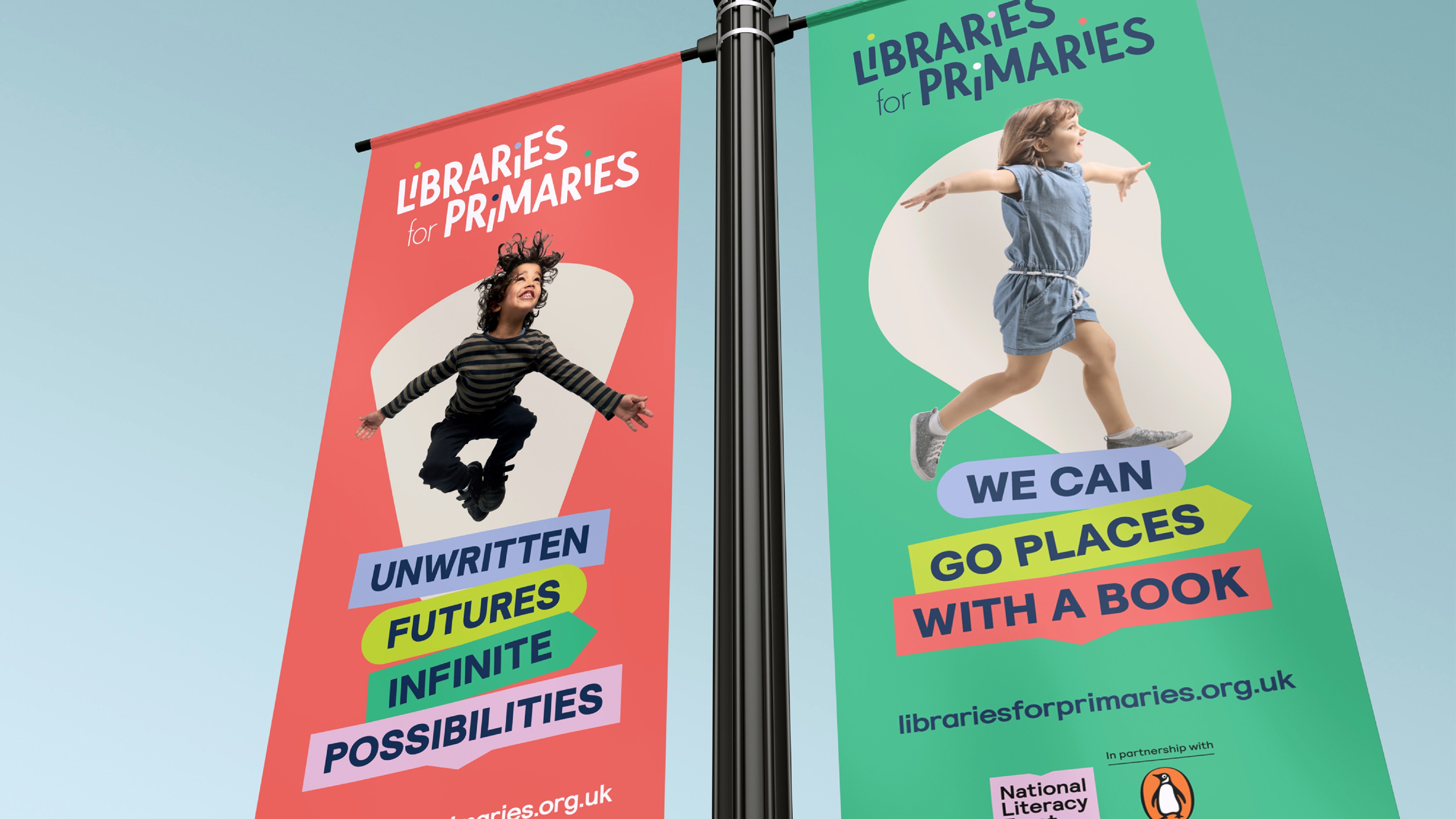
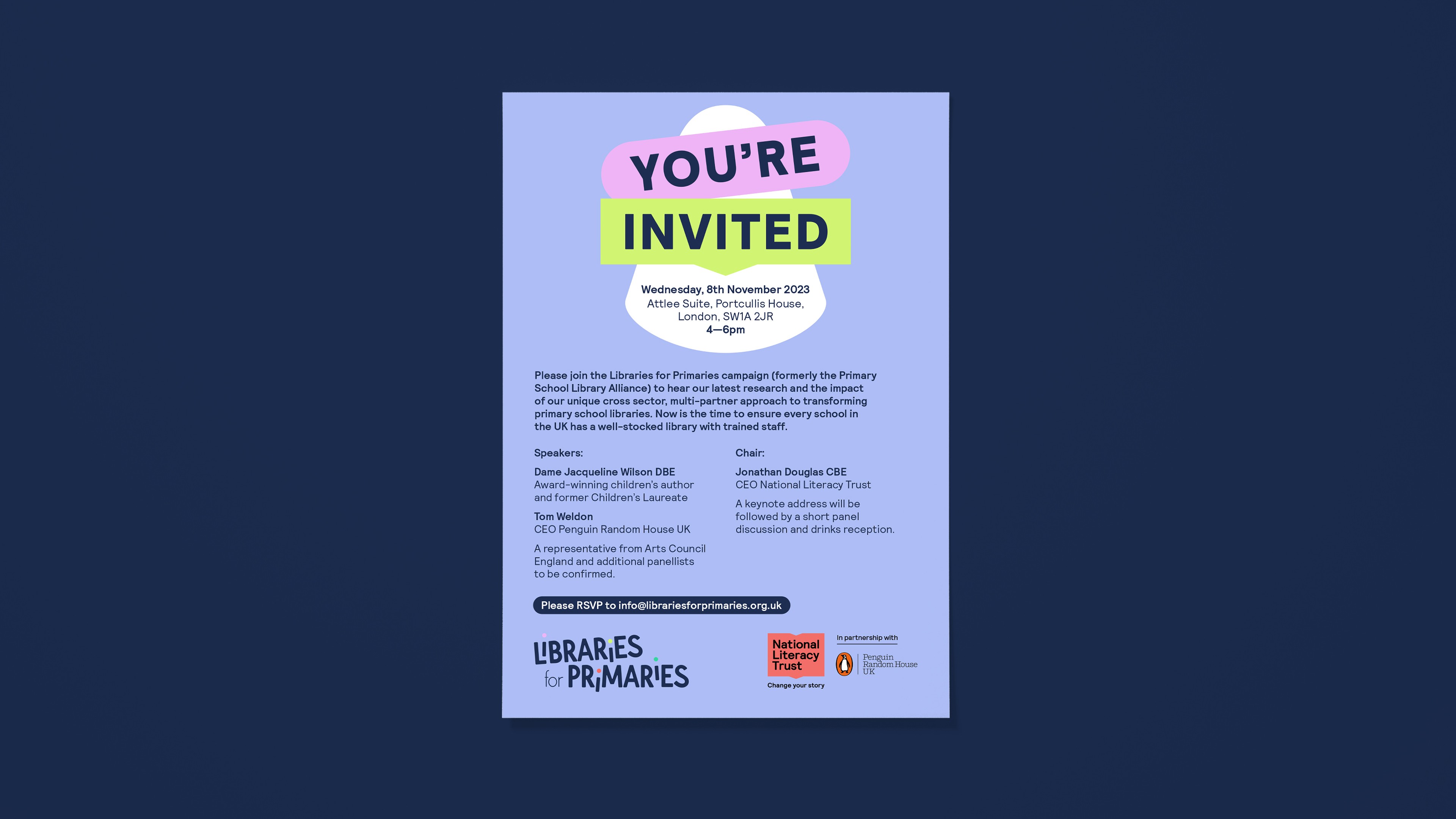
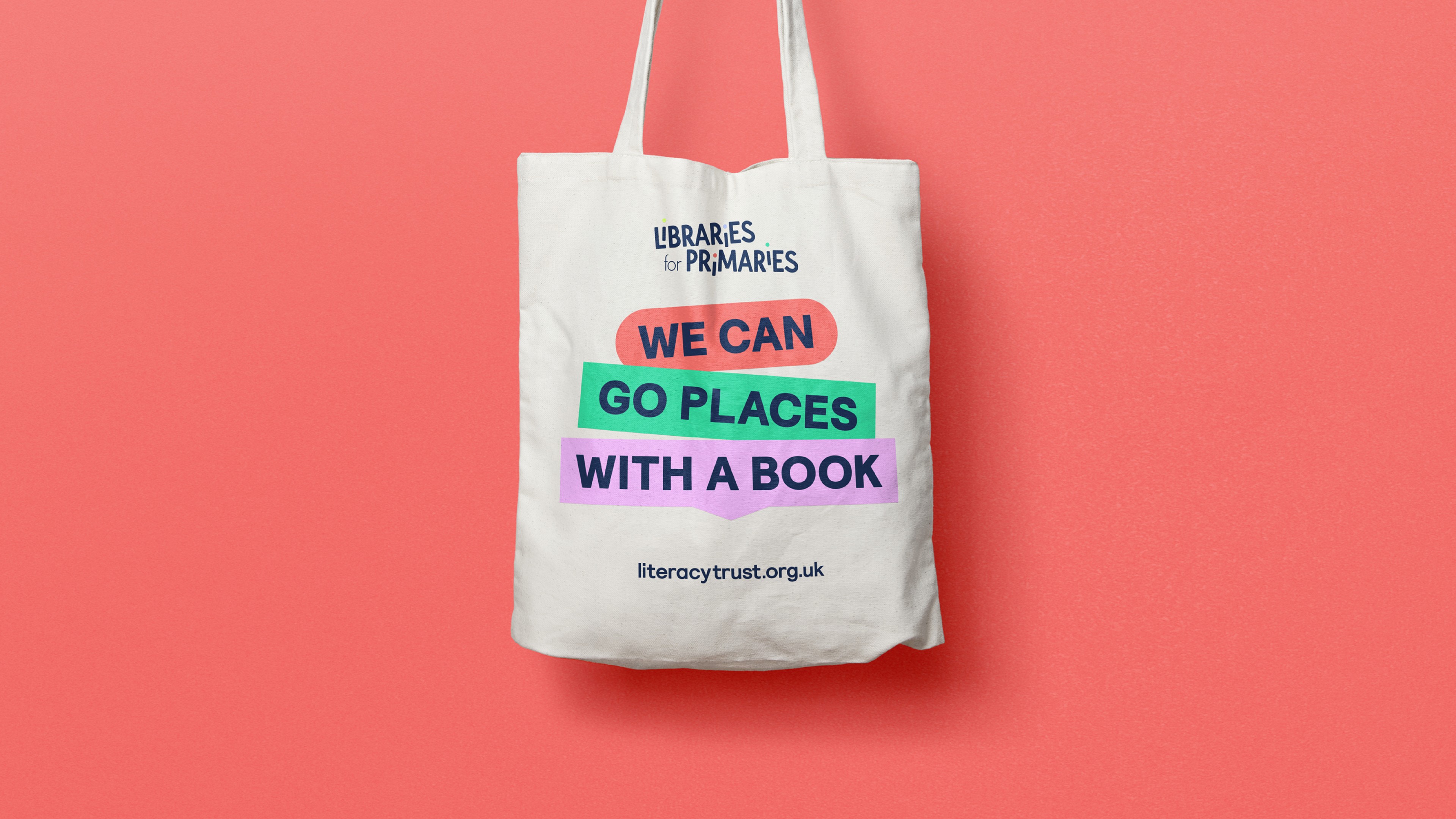
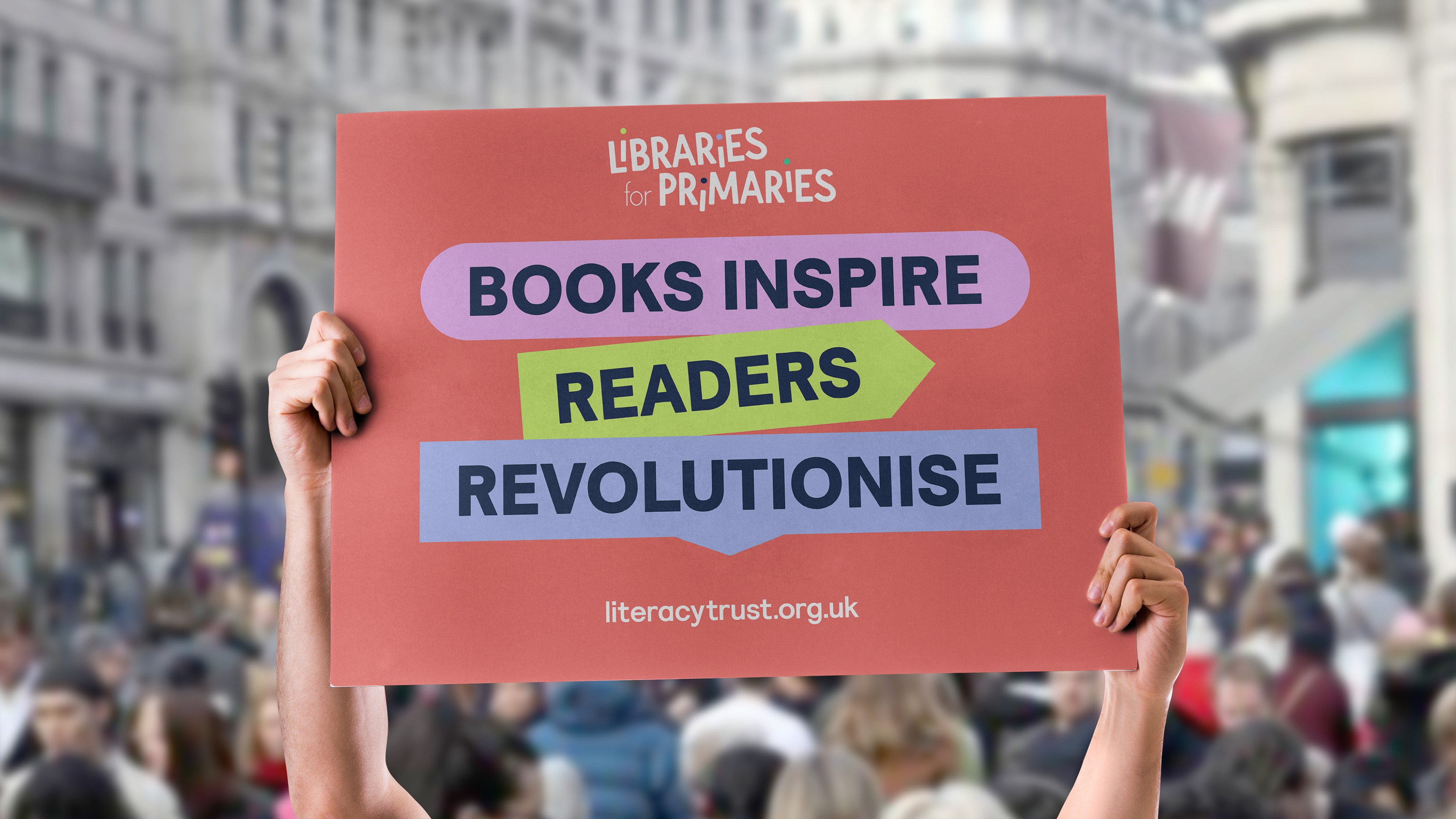
with evidence about the impact of reading for pleasure on wellbeing and attainment. The idea “Books inspire. Readers revolutionise.” gave the campaign a memorable rallying point, while accessible materials and adaptable templates allowed schools, publishers and supporters to carry the message into events, exhibitions and digital channels.
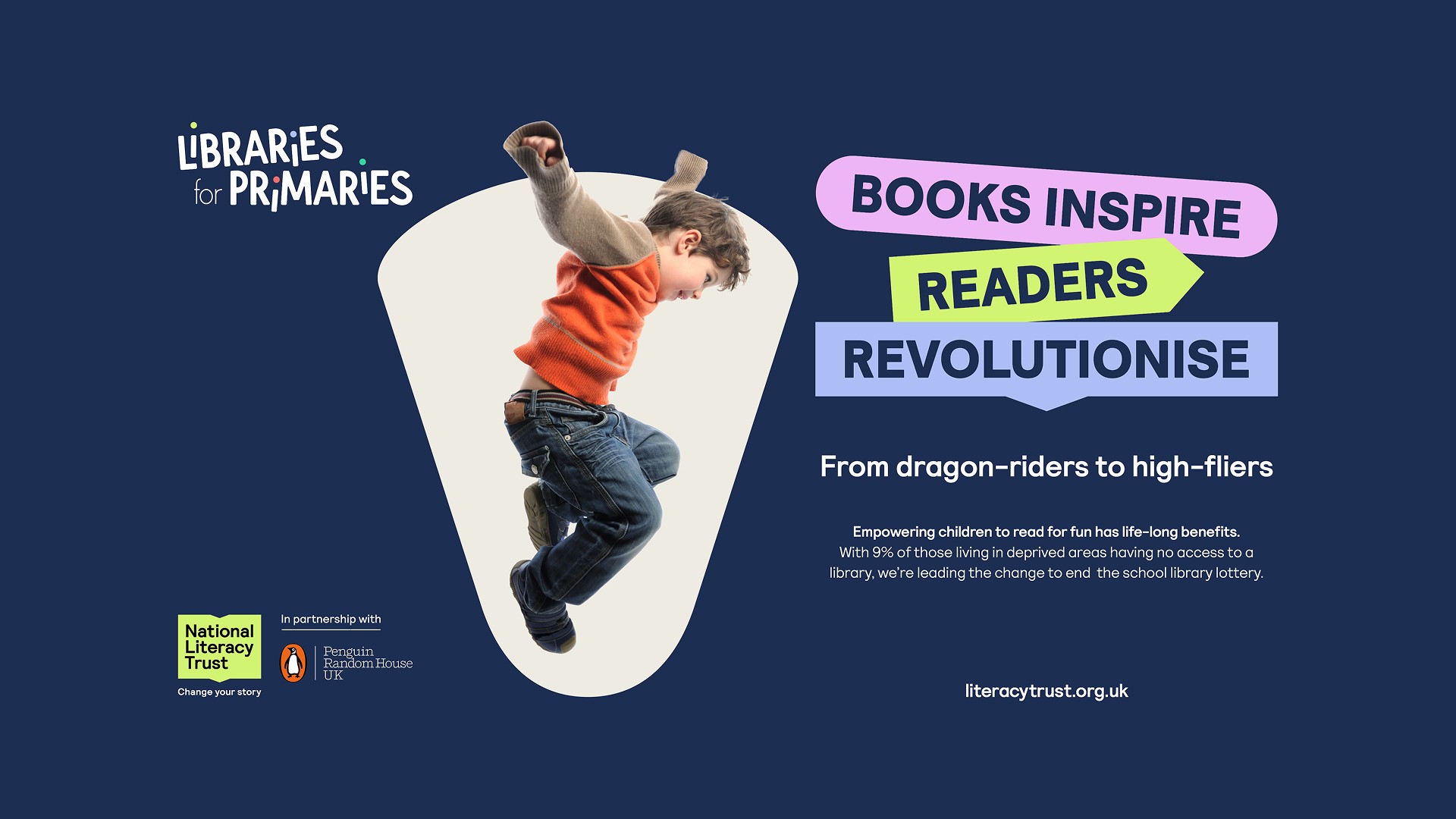
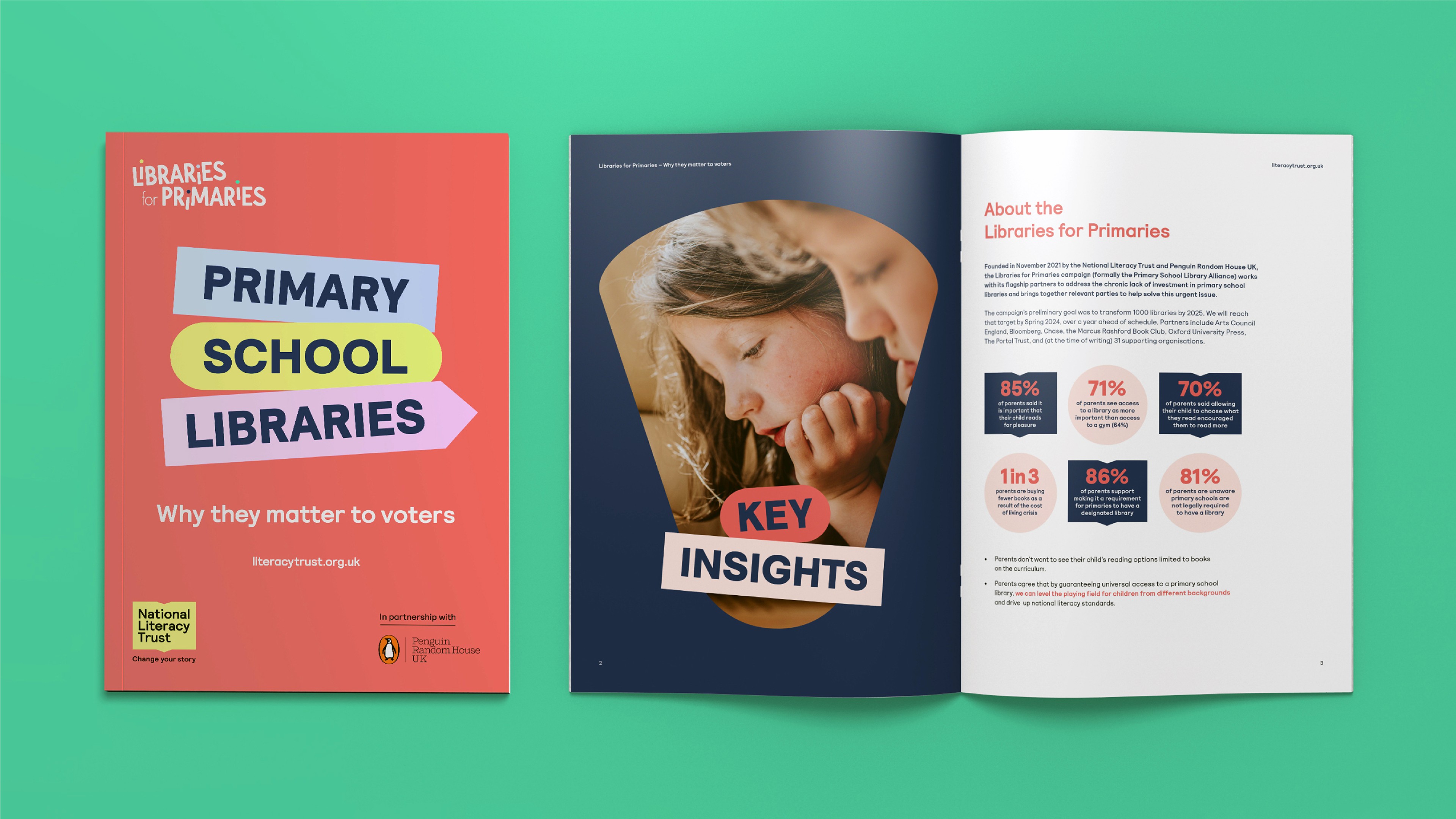
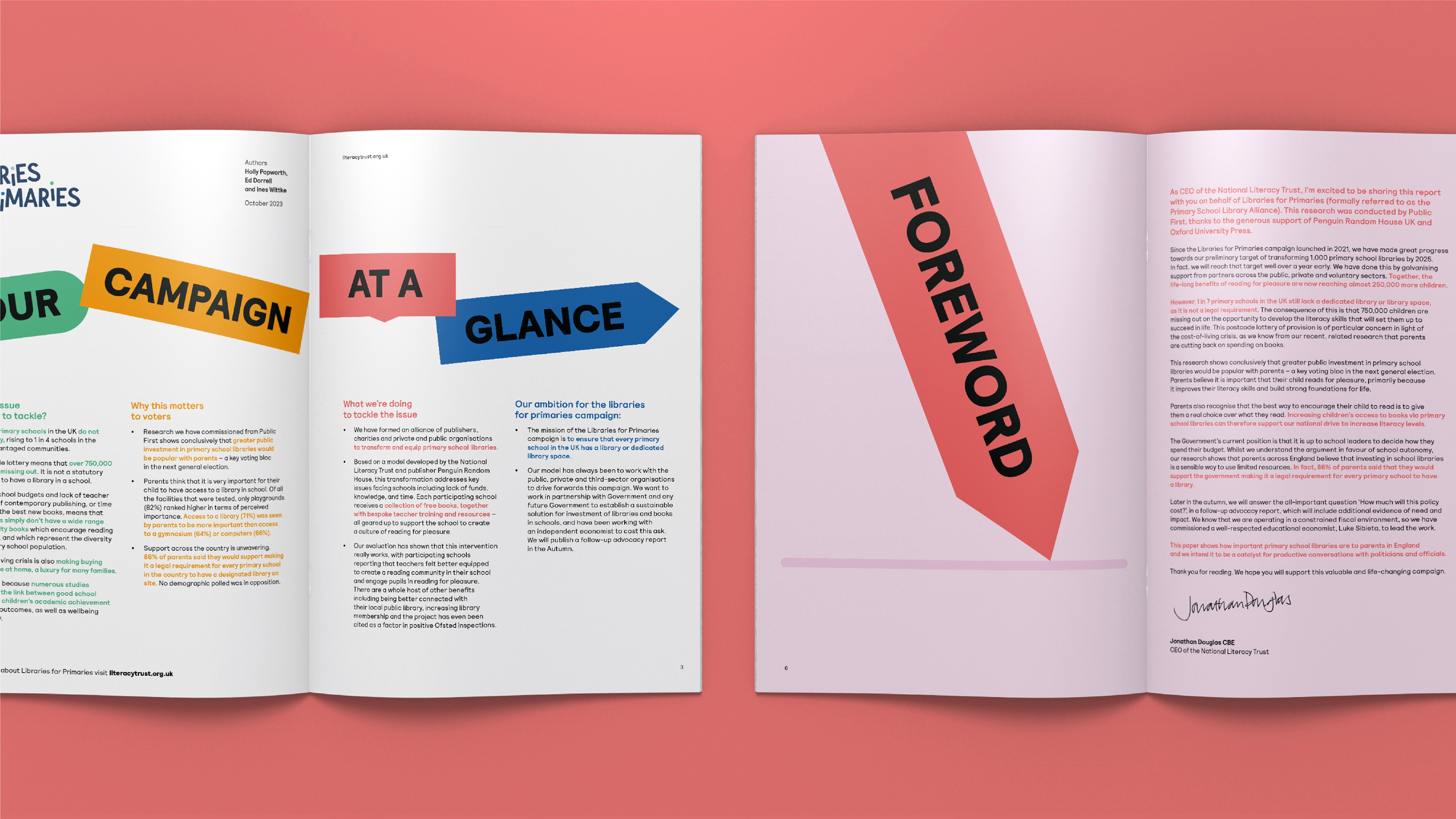
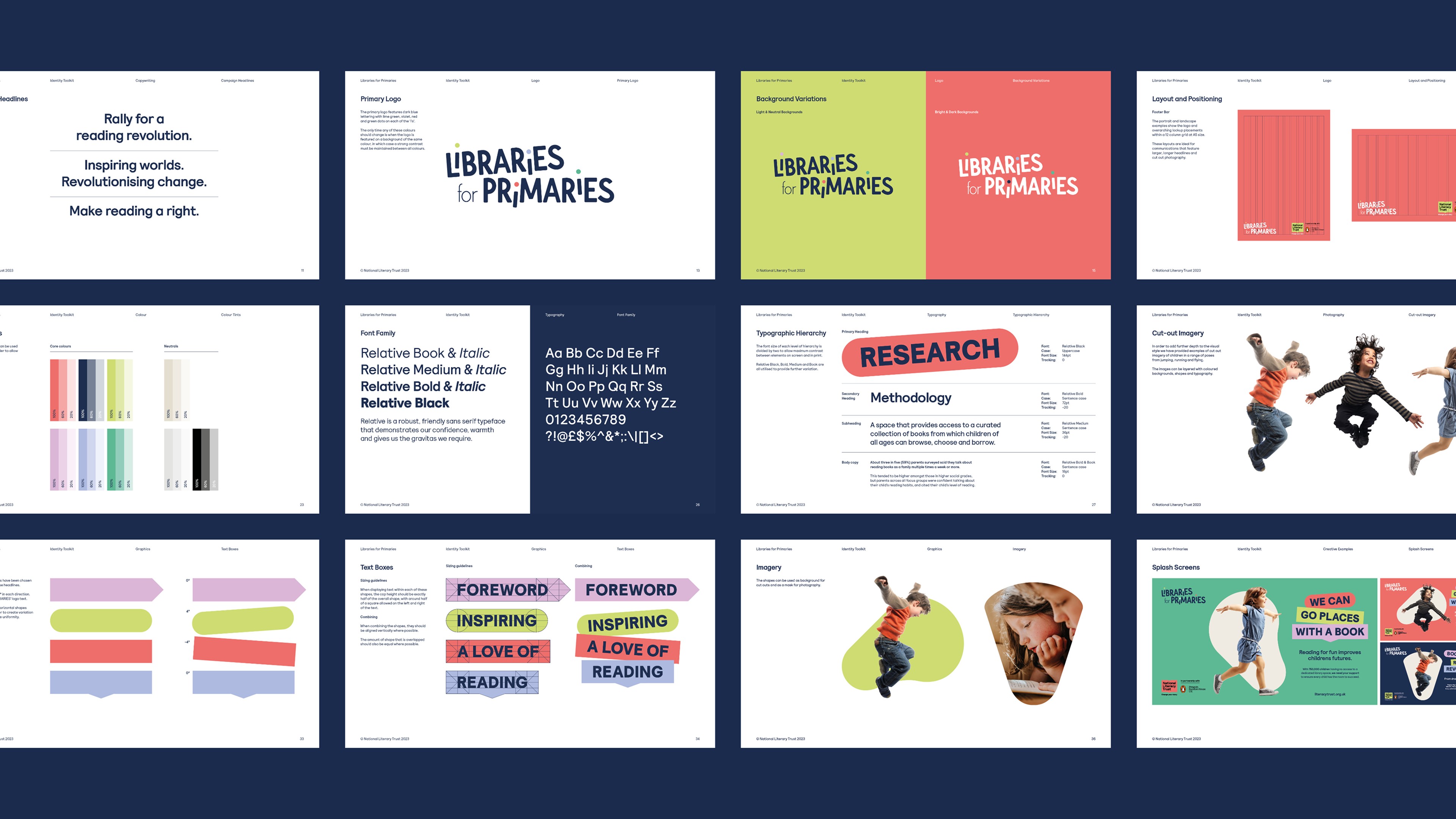
The first step was giving the initiative a name that said exactly what it set out to achieve. Libraries for Primaries. Clear, direct and impossible to misunderstand. Around that name we built a campaign identity designed to travel across partners and audiences, balancing optimism with evidence about the impact of reading for pleasure on wellbeing and attainment. The idea “Books inspire. Readers revolutionise.” gave the campaign a memorable rallying point, while accessible materials and adaptable templates allowed schools, publishers and supporters to carry the message into events, exhibitions and digital channels.
The first step was giving the initiative a name that said exactly what it set out to achieve. Libraries for Primaries. Clear, direct and impossible to misunderstand. Around that name we built a campaign identity designed to travel across partners and audiences, balancing optimism with evidence about the impact of reading for pleasure on wellbeing and attainment. The idea “Books inspire. Readers revolutionise.” gave the campaign a memorable rallying point, while accessible materials and adaptable templates allowed schools, publishers and supporters to carry the message into events, exhibitions and digital channels.
APPROACH
The first step was giving the initiative a name
that said exactly what it set out to achieve. Libraries for Primaries. Clear, direct and impossible to misunderstand. Around that name we built
a campaign identity designed to travel across partners and audiences, balancing optimism
with evidence about the impact of reading for pleasure on wellbeing and attainment. The idea “Books inspire. Readers revolutionise.” gave the campaign a memorable rallying point, while accessible materials and adaptable templates allowed schools, publishers and supporters to carry the message into events, exhibitions and digital channels.
The first step was giving the initiative a name that said exactly what it set out to achieve. Libraries for Primaries. Clear, direct and impossible to misunderstand. Around that name we built a campaign identity designed to travel across partners and audiences, balancing optimism with evidence about the impact of reading
for pleasure on wellbeing and attainment. The idea “Books inspire. Readers revolutionise.” gave the campaign a memorable rallying point, while accessible materials and adaptable templates allowed schools, publishers and supporters to carry the message into events, exhibitions and digital channels.
APPROACH
The first step was giving the initiative a name
that said exactly what it set out to achieve. Libraries for Primaries. Clear, direct and impossible to misunderstand. Around that name we built
a campaign identity designed to travel across partners and audiences, balancing optimism
with evidence about the impact of reading for pleasure on wellbeing and attainment. The idea “Books inspire. Readers revolutionise.” gave the campaign a memorable rallying point, while accessible materials and adaptable templates allowed schools, publishers and supporters to carry the message into events, exhibitions and digital channels.
The first step was giving the initiative a name that said exactly what it set out to achieve. Libraries for Primaries. Clear, direct and impossible to misunderstand. Around that name we built a campaign identity designed to travel across partners and audiences, balancing optimism with evidence about the impact of reading for pleasure on wellbeing and attainment. The idea “Books inspire. Readers revolutionise.” gave the campaign a memorable rallying point, while accessible materials and adaptable templates allowed schools, publishers and supporters to carry the message into events, exhibitions and digital channels.
RESULTS
RESULTS
The campaign helped galvanise national attention around the importance of school libraries. As part of the wider programme, close to half a million children have gained improved access to diverse books and reading spaces. Around 1,500 primary school libraries and dedicated reading areas have been created or transformed, supported by the distribution of hundreds of thousands of books to schools across the UK. The initiative has also equipped more than 3,000 teachers and school staff with training to champion reading for pleasure in their classrooms.
The campaign helped galvanise national attention around the importance of school libraries. As part of the wider programme, close to half a million children have gained improved access to diverse books and reading spaces. Around 1,500 primary school libraries and dedicated reading areas have been created or transformed, supported by the distribution of hundreds of thousands of books to schools across the UK. The initiative has also equipped more than 3,000 teachers and school staff with training to champion reading for pleasure in their classrooms.
RESULTS
The campaign helped galvanise national attention around the importance of school libraries. As part of
the wider programme, close to half a million children have gained improved access to diverse books and reading spaces. Around 1,500 primary school libraries
and dedicated reading areas have been created or transformed, supported by the distribution of hundreds
of thousands of books to schools across the UK.
The initiative has also equipped more than 3,000 teachers and school staff with training to champion reading for pleasure in their classrooms.
RESULTS
The campaign helped galvanise national attention around the importance of school libraries. As part of the wider programme, close
to half a million children have gained improved access to diverse books and reading spaces. Around 1,500 primary school libraries and dedicated reading areas have been created
or transformed, supported by the distribution
of hundreds of thousands of books to schools across the UK. The initiative has also equipped more than 3,000 teachers and school staff with training to champion reading for pleasure
in their classrooms.
start a project today
start a project today
start a project today
start a project today
start a project today
start a project today
start a project today